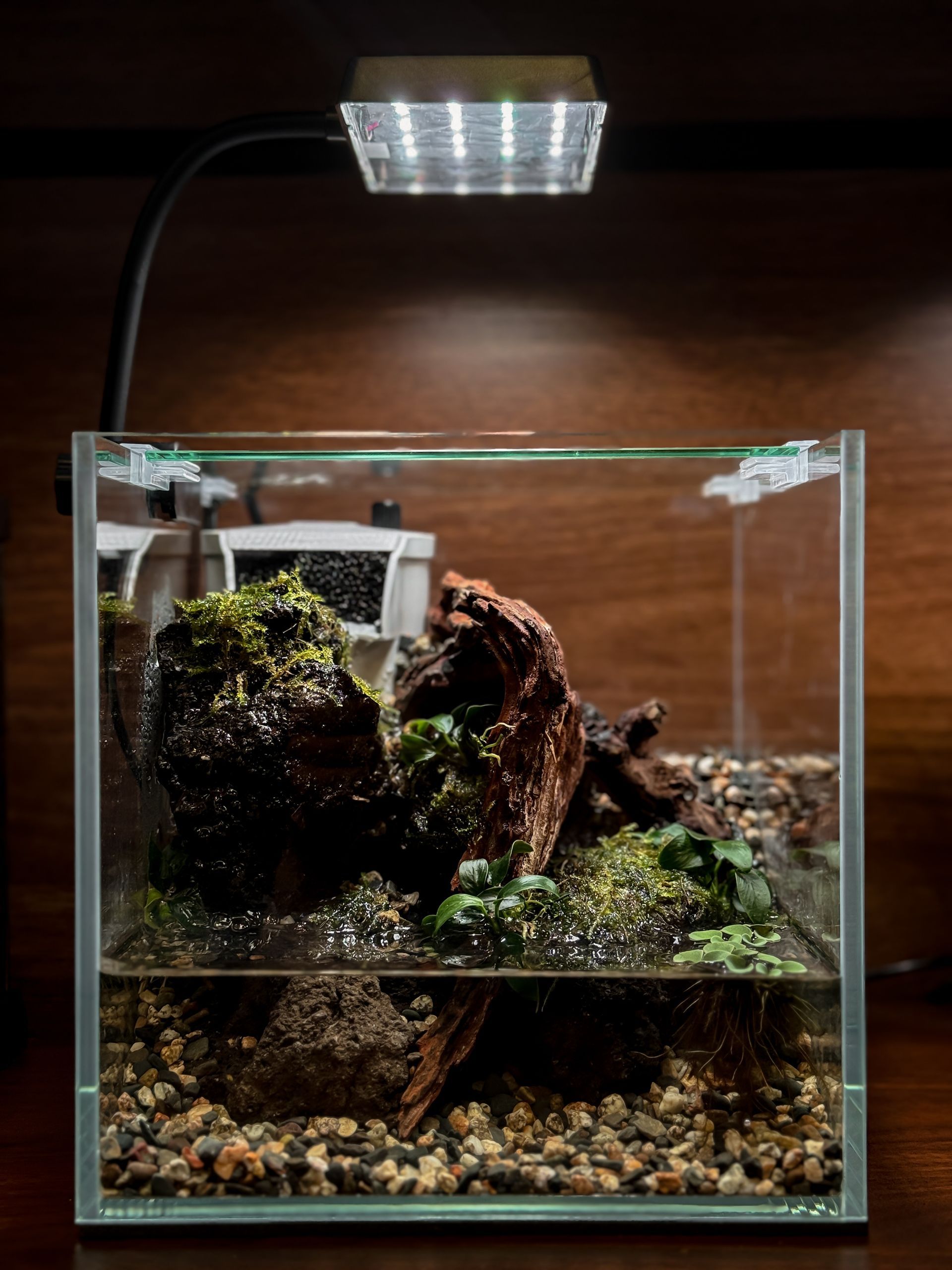
How to care for it
Five things keep a crab paludarium healthy.
Water — keep the pool clean
Top up evaporation with dechlorinated water, and change about 10–20% every week or two once it's established. Clean water is what keeps your crabs healthy — tap water straight from the pipe contains chlorine that harms them, so always treat it first.
Humidity & air — keep it muggy
Crabs breathe through gills and need humid air and a dry spot to climb out onto. Keep the lid on to hold humidity, and give it a light mist if the land looks dry. A small gap for airflow stops it going stale.
Light — gentle and steady
Give it bright, indirect light or a small LED for 6–8 hours a day to keep the plants growing. Keep it out of direct sun, which overheats a small tank.
Feeding — little and varied
Crabs are omnivores. Offer small amounts a few times a week — blanched veg, a little fish or crab food, the occasional protein. Pop in a piece of cuttlebone for the calcium they need to moult. Remove anything uneaten the next day so it doesn't foul the water.
Temperature — room temperature
Normal indoor temperature suits them. Keep it off direct air-con draughts and away from heat or direct sun.
What's normal at first
A new paludarium is finding its feet, so don't worry if you see:
- Slightly cloudy water in the first weeks — the system is cycling and building good bacteria.
- Shy crabs — they hide while they settle in. They'll come out more as they feel safe.
- A shed shell (it looks like a second crab!) — that's moulting, and it's healthy. Leave it; they eat it back for calcium.
- New plant growth — the sign everything's settling well.
Frequent problems you might face
Pump making a weird noise — almost always air or a low water level. Top the water up, and gently tap or re-seat the pump to clear trapped air. If it rattles, check nothing's lodged in the intake.
Cloudy or smelly water — usually overfeeding. Remove uneaten food, feed less, and do a small water change.
White, fuzzy mould on wood or land — normal on new hardscape. Wipe it off and add a few springtails; they'll clear it for good.
Plant melt or yellowing leaves — some plants drop leaves while adjusting. Trim the mushy or yellow bits; new growth follows.
An escapee — crabs are climbers. Keep the lid on and close any gaps around cables.
Good to know
How do I know when it's cycled and safe for the crabs?+
Give it about 2–3 weeks, then confirm with a water test rather than the calendar. When ammonia and nitrite both read 0 (with a little nitrate showing), the beneficial bacteria are established and it's safe. A simple test kit is the most reliable way to tell. Adding crabs too early exposes them to toxic ammonia — if your build came home already set up, ask us where it is in the cycle.
What can live with vampire crabs?+
In a nano paludarium they do best species-only or with a few snails. Avoid fish — the water is shallow and crabs can be territorial.
How often should I change the water?+
Once established, change about 10–20% of the pool water every week or two with dechlorinated, temperature-matched water. Top up evaporation in between.
How do I wash the filter without killing the system?+
Rinse the filter media in old tank water you've just removed — never under the tap. Tap water's chlorine kills the beneficial bacteria living in the filter. A gentle squeeze every few weeks is plenty.
Will it attract mosquitoes?+
No. With a lid and gently moving, filtered water there's nowhere for mosquitoes to breed — they need still, open water.
How long will it last?+
Years, with the basics. Vampire crabs typically live around two years; the planted system itself is long-term with light upkeep.
Need a hand?
You built it with us, so you're never on your own with it. If the water looks off, the pump plays up, or a crab seems unhappy, message us a photo on WhatsApp and we'll talk you through it — or bring it down to the studio for a reset.