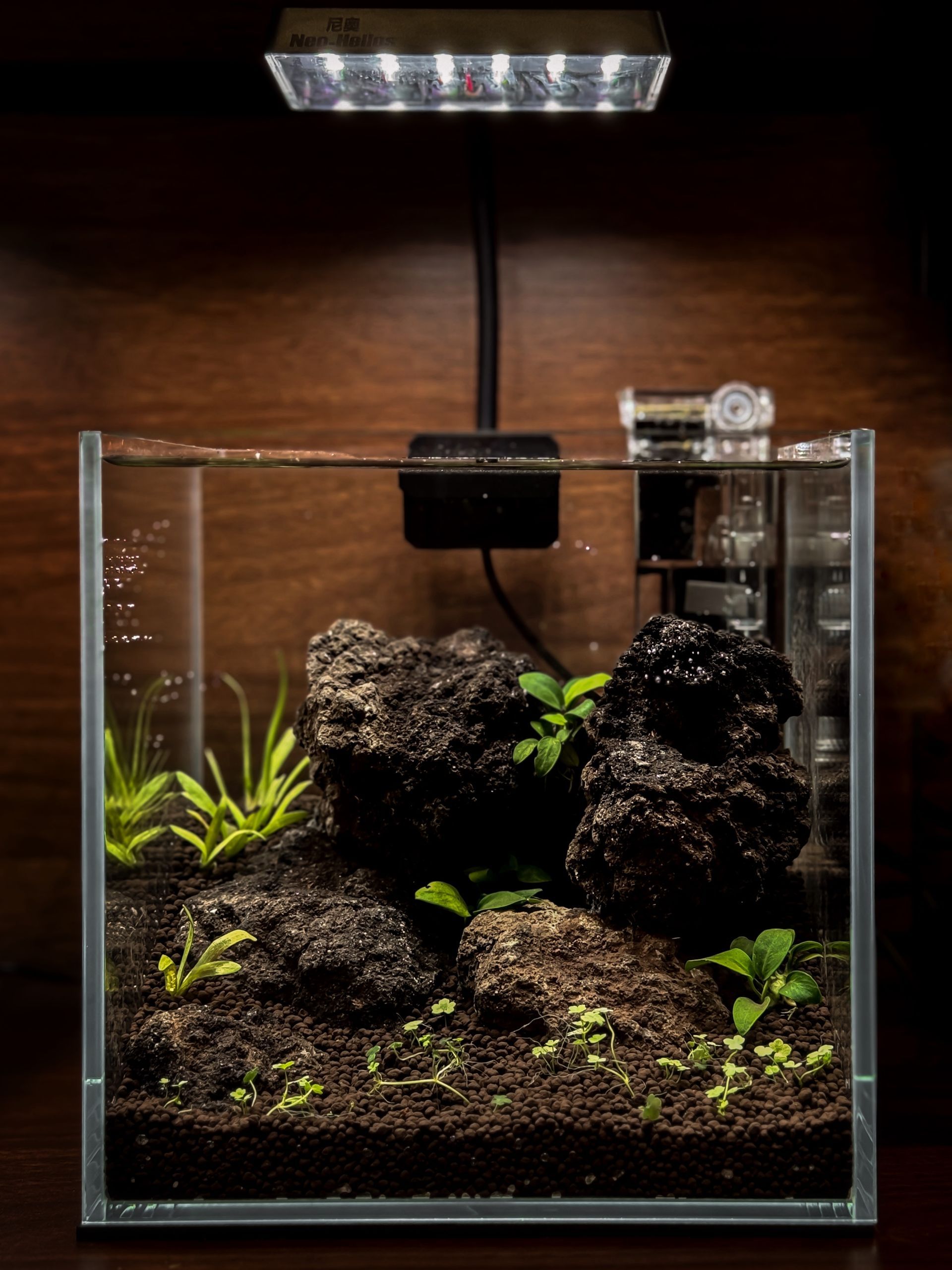
How to care for it
Five things keep a shrimp aquascape thriving.
Water — clean and stable
This is everything for shrimp. Change about 10–20% once a week with dechlorinated, temperature-matched water, added slowly. Shrimp handle gentle, steady care far better than big sudden changes — stability beats perfection every time.
Filter & flow — gentle, always on
Leave the filter running 24/7 — the media inside houses the bacteria that keep the water safe. Your tank runs a hang-on filter, so slip a sponge pre-filter over the intake — it stops baby shrimp being pulled in. If the outflow is strong, baffle it so the shrimp aren't pushed around.
Light — enough for plants, not algae
6–8 hours a day on a timer keeps the plants growing without feeding algae. Keep it out of direct sun. If algae creeps in, dial the light back.
Feeding — less is more
Shrimp graze on the natural biofilm in the tank, so they need very little. A tiny amount of shrimp food 2–3 times a week is plenty — only as much as they finish in a couple of hours. Overfeeding is the fastest way to foul the water.
Temperature — cool and steady
Neocaridina shrimp are happy at normal indoor temperature. Keep it stable and out of direct sun — they dislike sudden swings far more than the exact number.
What's normal at first
A new aquascape is settling in, so don't worry if you see:
- Cloudy water in the first week or two — a harmless bacterial bloom as the tank matures. It clears on its own.
- Shrimp grazing constantly over every surface — exactly what they should do.
- A tiny white shed casing — that's a moult, and it's healthy. Leave it; they'll often eat it back.
- A "berried" female carrying eggs under her tail — a great sign your water is right.
Frequent problems you might face
Shrimp dying after a water change — almost always the change was too big, too fast, or the water wasn't dechlorinated. Go smaller and slower, and always treat tap water first.
Filter making a weird noise — usually a low water level or a clog. Top up the water and clear the intake. Rinse the filter media in old tank water if flow has dropped.
Algae on the glass or plants — reduce the light hours and feed less. A wipe of the glass and a couple of snails keep it in check.
Plant melt or yellowing leaves — normal as new plants convert to underwater growth. Trim the dying leaves; fresh growth follows.
Cloudy water that won't clear — usually overfeeding. Cut back food, remove any leftovers, and do a small water change.
Good to know
How do I know when it's cycled and safe for shrimp?+
Give it at least 2–3 weeks (longer is safer for shrimp) — but go by a water test, not just the calendar. When ammonia and nitrite both read 0 and a little nitrate has appeared, the tank is cycled and ready. A simple test kit is the most reliable way to tell. Adding shrimp before then is the most common cause of losses.
Can I keep fish with my shrimp?+
In a nano tank it's best shrimp-only, or with a few snails. Most fish eat baby shrimp, so a colony won't grow with fish in there. If you want fish, keep them in a separate, larger tank.
What about tank mates — snails, betta, crabs?+
Snails are great companions and help with algae. A betta or other fish will hunt shrimplets, and crabs want land, so they're not suited to a shrimp nano. Shrimp-and-snails is the safe, thriving combo.
How do I wash the filter without crashing the tank?+
Rinse the filter media in old tank water you've just removed — never under the tap. Tap water's chlorine kills the beneficial bacteria living in it. A gentle rinse every few weeks is enough — and don't swap out all the media at once, or you'll lose your bacteria.
How long before I change the aqua soil?+
Active aqua soil buffers the water for roughly 1–2 years before it's spent. Top it up or rescape when that time comes — until then, leave it be.
Will it attract mosquitoes, and how long will it last?+
Filtered and indoors, there's no still water for mosquitoes to breed. A well-kept shrimp tank runs for years — the shrimp breed and replace themselves over time.
Need a hand?
You built it with us, so you're never on your own with it. If the water clouds, the shrimp look unsettled, or you're not sure when to add them, message us a photo on WhatsApp and we'll guide you — or bring it down to the studio for a check.