How to care for it
Five things keep a frog paludarium thriving.
Misting & humidity: daily, or automated
Mist the enclosure once a day with treated (anti-chlorine) water, morning is easiest, so the humidity stays in the middle band. Frogs absorb water through their skin, so untreated tap water matters more here than in a fish tank. If you added the misting system, it does this for you and your job becomes the reservoir: check it weekly and refill with treated water.
Feeding: live insects, dusted
Live crickets or roaches, dusted with calcium powder, 2-3 times a week for adults. Only as many as the frog finishes that evening, and remove uneaten insects the next morning. White's are greedy: a chubby frog is overfed, not extra healthy.
The pool: refresh it weekly
Replace the pool water weekly with treated water. Frogs soak and shed in it, so it works harder than it looks. If you added the filtration add-on, a monthly rinse of the media in old pool water is enough.
Temperature: warm room, no extremes
Normal Singapore indoor temperature suits them. Keep the enclosure out of direct sun and away from an aircon blast: steady and warm beats exact numbers.
Handling: rarely, and with wet hands
These frogs tolerate gentle handling better than most, but their skin absorbs whatever is on yours. Rinse your hands with treated water first, skip soaps and lotions, and keep it short. Watching is the hobby; holding is the exception.
What's normal at first
A new system is settling in, so don't worry if you see:
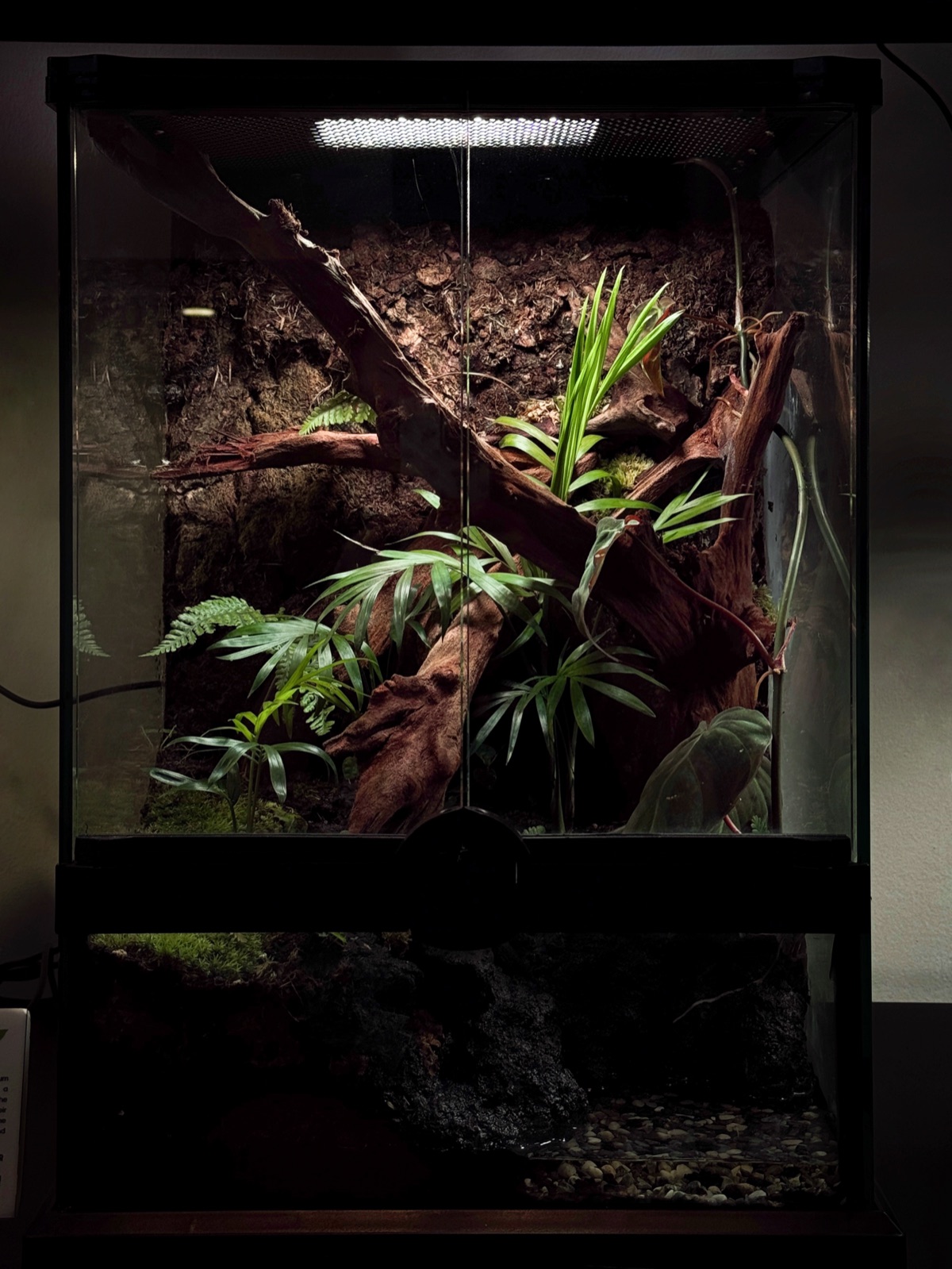
Frequent problems you might face
Skin looks dull or dry: humidity has dipped. Check the misting reservoir first: it is empty more often than the schedule is wrong.
Not eating: a newly arrived frog can skip meals for days while settling. If a settled frog stops eating for a week, message us a photo.
Getting round: feed less often. Obesity is the most common health problem in this species.
Pressing along the glass repeatedly: something in the setup feels wrong to the frog, usually humidity or temperature. Check both, then ask us.
Plants squashed flat: a heavy frog sits where it likes. The planting is chosen to take it; trim damage and it regrows.
Good to know
When can the frogs move in?+
2-4 weeks after setup: the enclosure needs to mature and stabilise first. We bring the frogs along on a maintenance visit and settle them in. See the add-ons on the Canopy page.
What do they eat, exactly?+
Live insects: crickets and roaches are the staples. Dust them with calcium powder before feeding. No human food, no dried insects as the main diet.
What about holidays?+
Adults are fine unfed for several days, and the misting runs itself. Top up the reservoir before you go. For longer trips, ask us about a holiday visit.
Are they noisy?+
Males croak at night, sometimes loudly for a few minutes. Most owners grow fond of it; light sleepers should not put the enclosure in the bedroom.
Can fish live in the pool?+
Only with the filtration add-on, and only small, tough species. Ask us first: the pool is sized for soaking frogs, not a fish community.
Where should it sit?+
On a level surface that takes the weight, out of direct sun, near a power point. Not sure about a spot? WhatsApp us a photo.