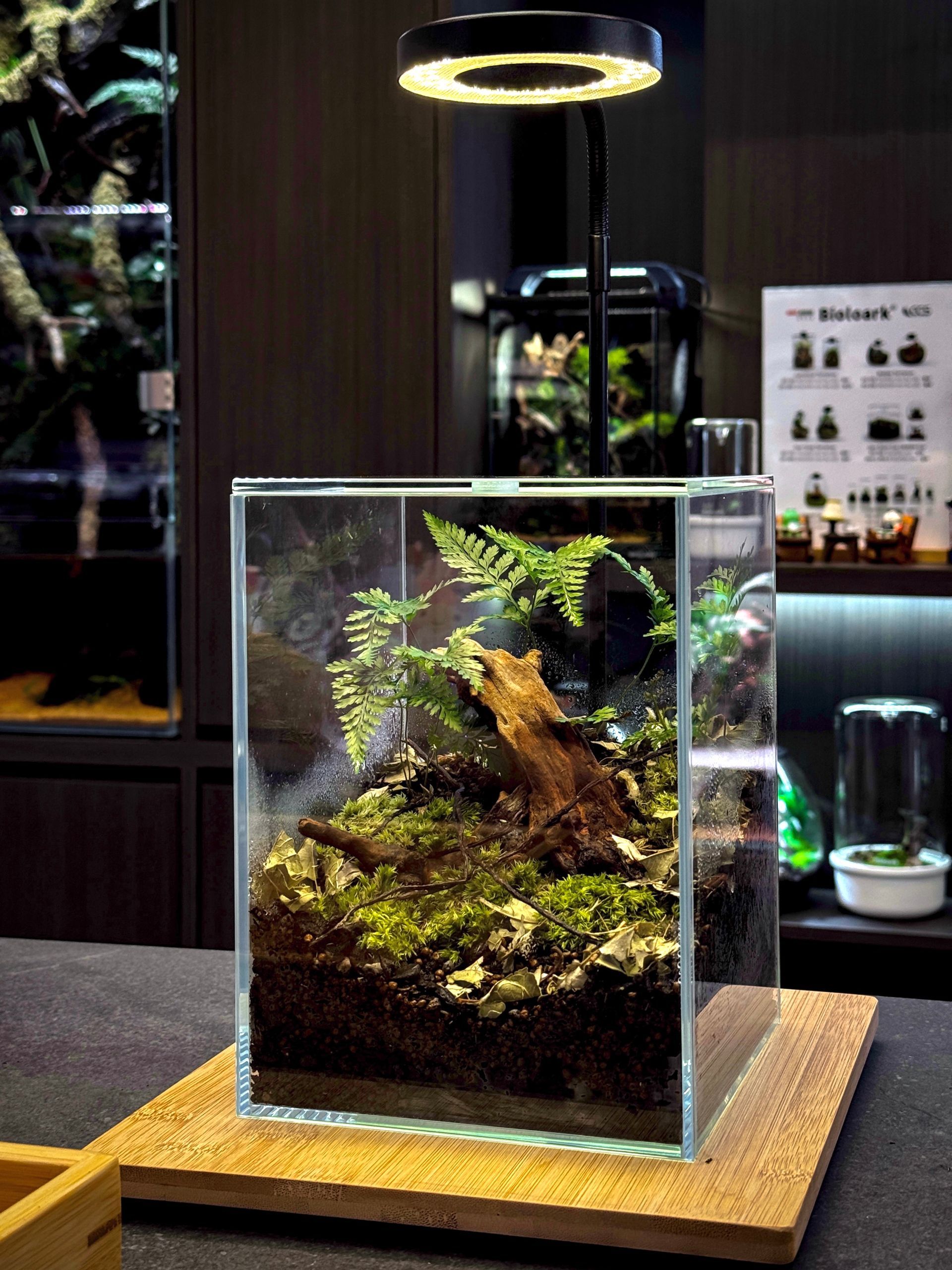
How to care for it
Four simple things, and your terrarium will mostly run itself.
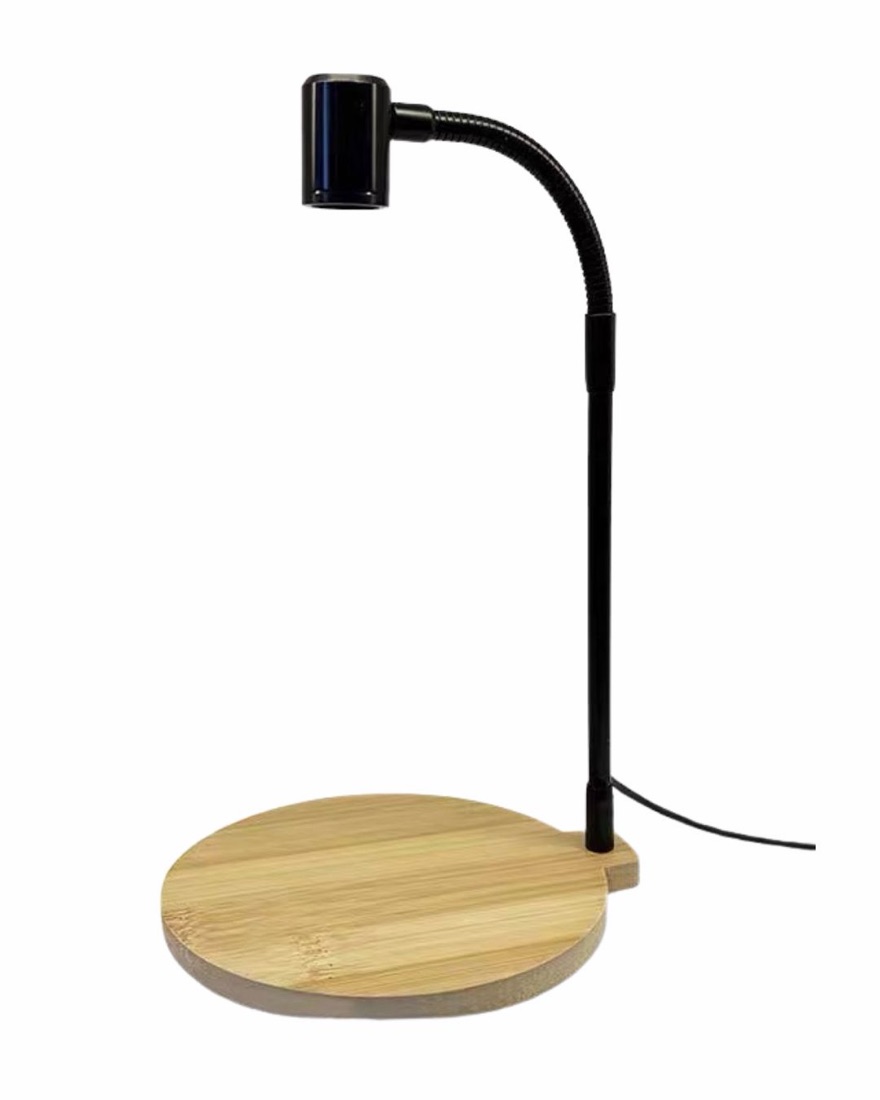
Light: bright, but never direct sun
Give it bright, indirect light: a well-lit spot out of the sun's direct path, or a small LED grow light for 8-10 hours a day. Gentle daylight keeps the plants green and compact.
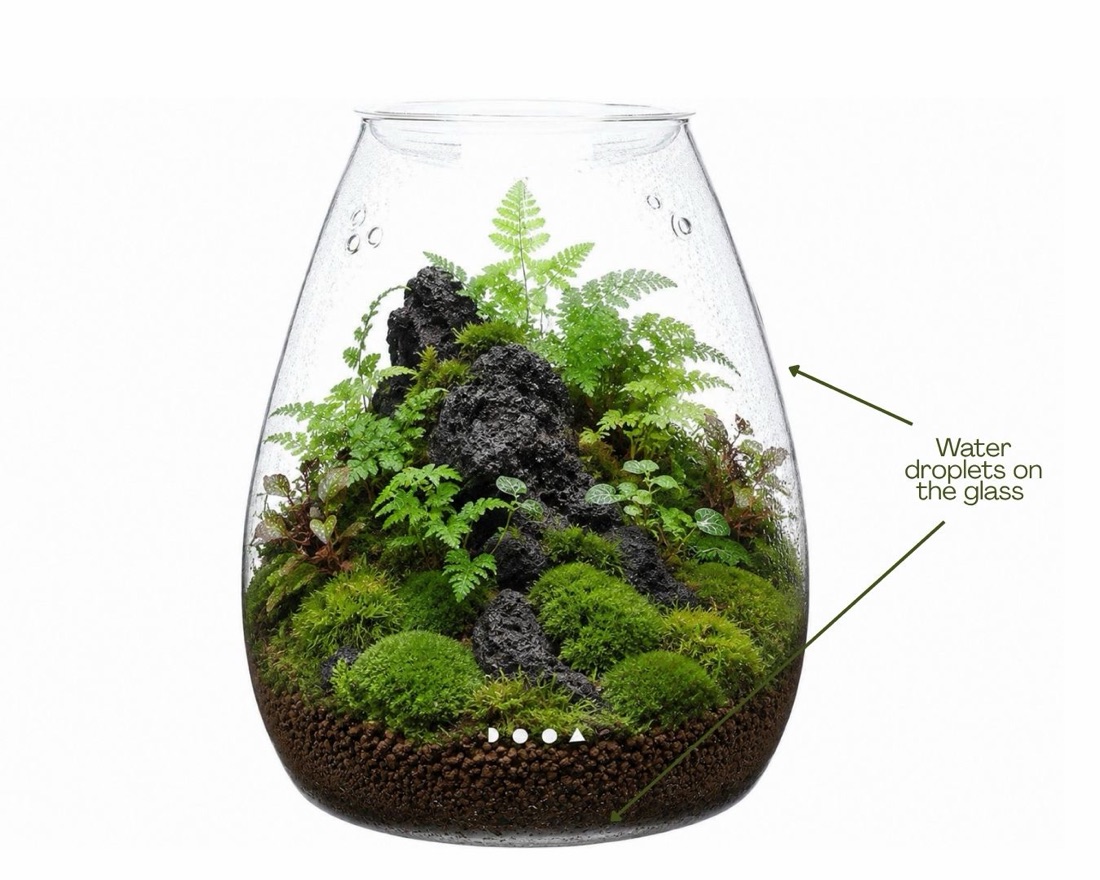
Water: far less than you think
Your terrarium is a closed water cycle: condensation on the glass is a good sign. Give the moss a light misting when it looks dry. Only water the soil, slowly, when the soil looks dry or the false bottom (the drainage layer at the base) has run dry of water. Overwatering is the number-one cause of a terrarium going downhill (rot and mould).
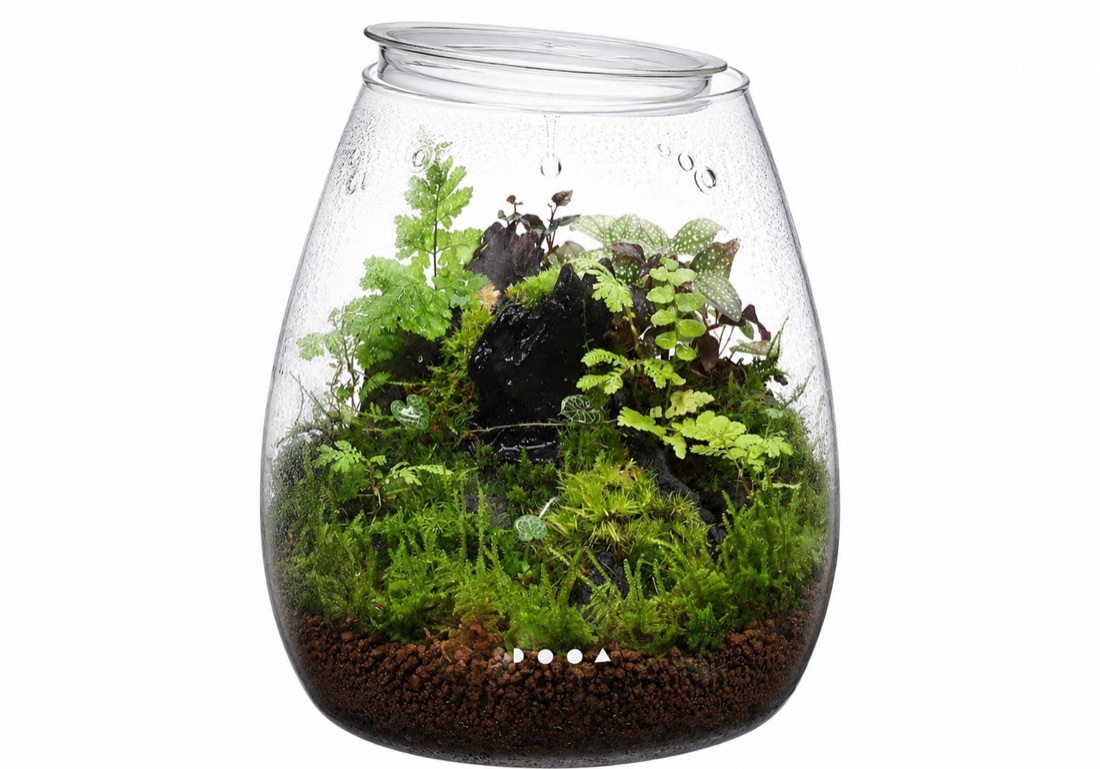
Air: let it breathe
Open the lid for 15-30 minutes every week or two for fresh air, and any time it fogs up so heavily you can't see in. A little airflow is what keeps mould away.
Temperature: cool and steady
Room temperature is ideal. Keep it out of direct air-con draughts and away from heat. Terrariums like the calm, stable conditions of the rainforest floor they're modelled on.
What's normal at first
A new terrarium is settling in, so don't panic if you see:
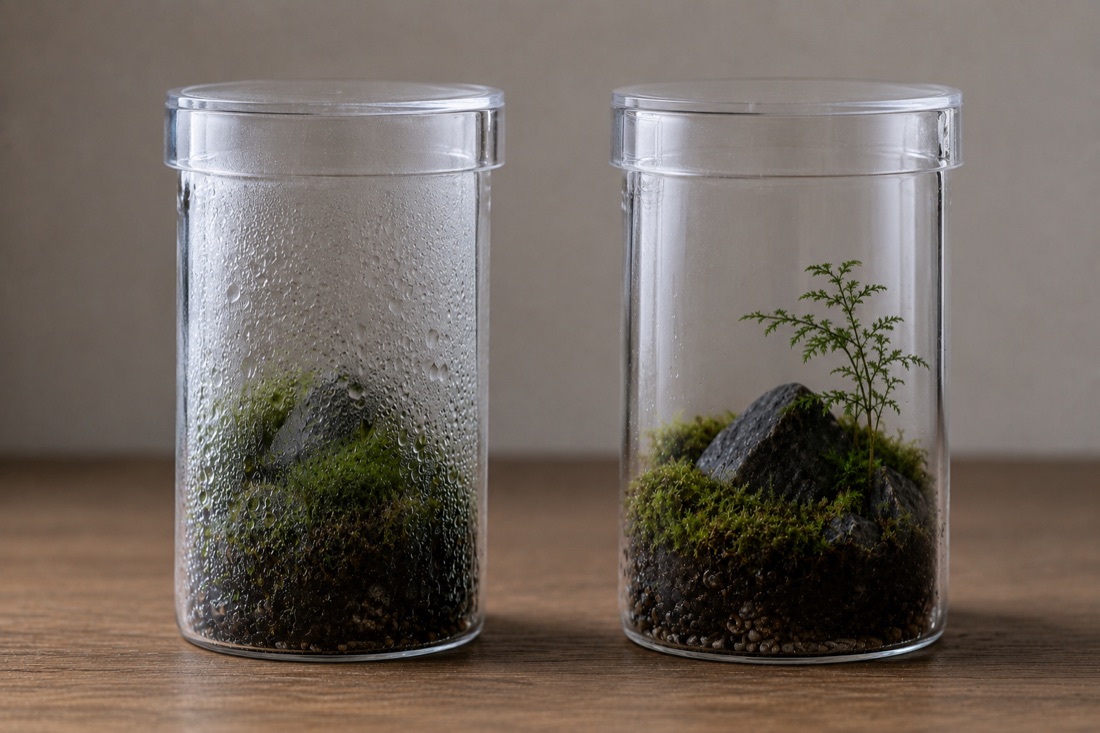
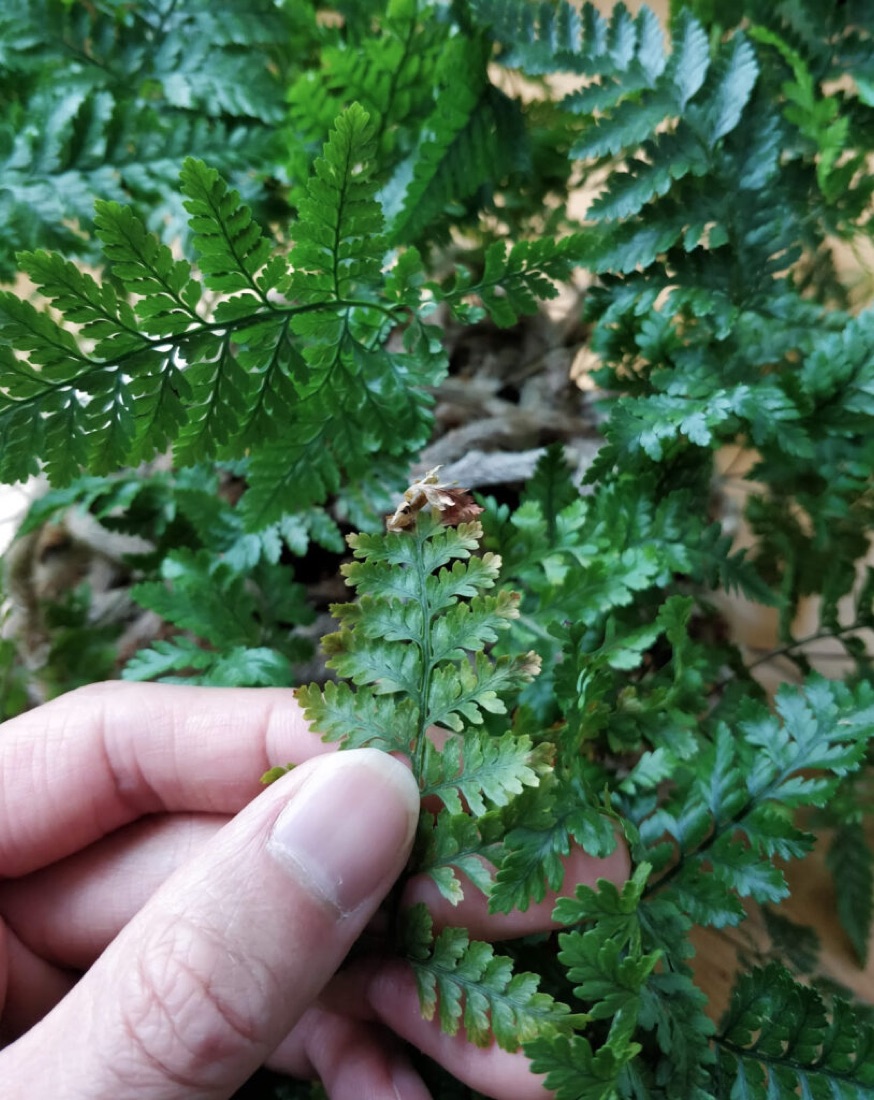
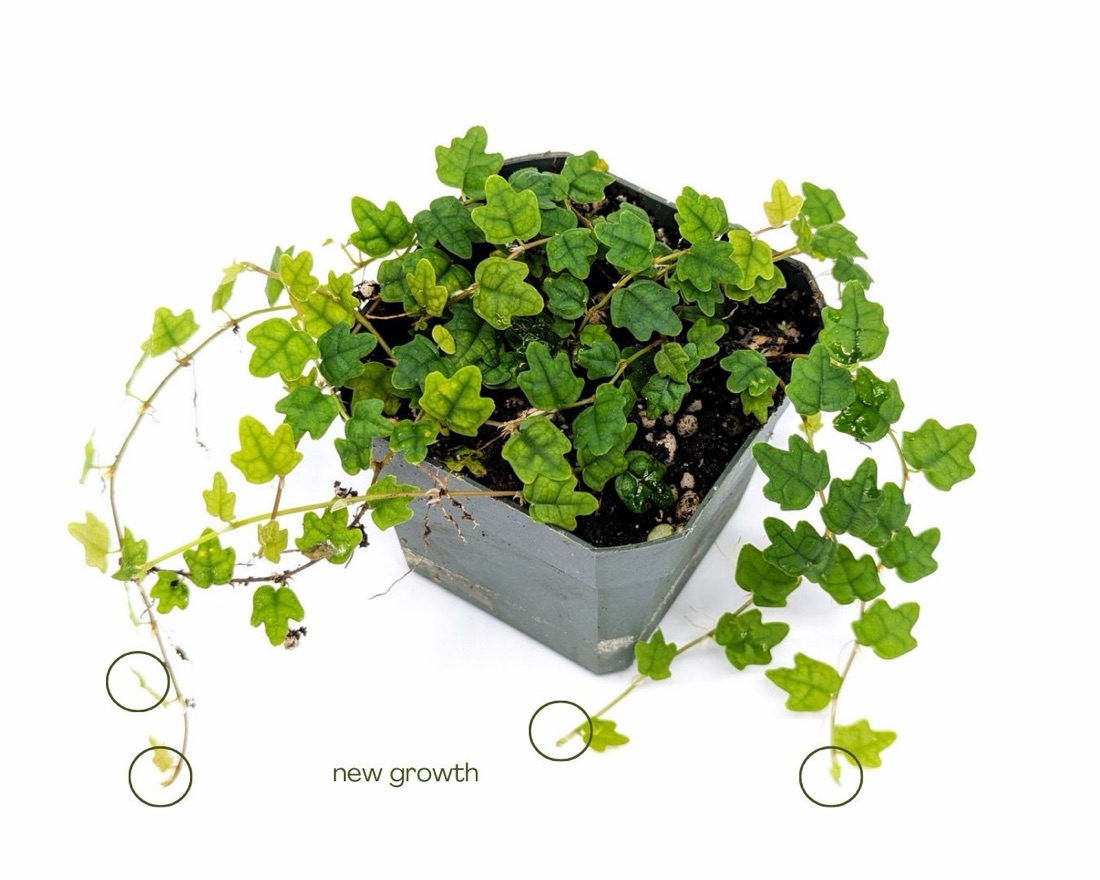
Frequent problems you might face
White, fuzzy mould: remove it with a cotton bud, open the lid more often, and mist less. A springtail clean-up crew keeps it away for good.
Plant "melt" (leaves go soft or see-through): normal for some plants adjusting to terrarium life. Trim off the mushy leaves and leave the roots; healthy new growth follows.
Green algae on the glass: wipe it off with a tissue, and check it isn't getting too much light or water.
Leggy or stretched plants: often a sign of too little light, so move it somewhere brighter (still no direct sun). Trim to shape. Terrariums respond well to a haircut.
Stays fogged up, can't see in: air it out, and make sure it isn't catching any direct sun.
Widespread yellowing or wilting: almost always too much water or direct sun. Ease off the misting and move it to bright shade.
What two of the most common look like
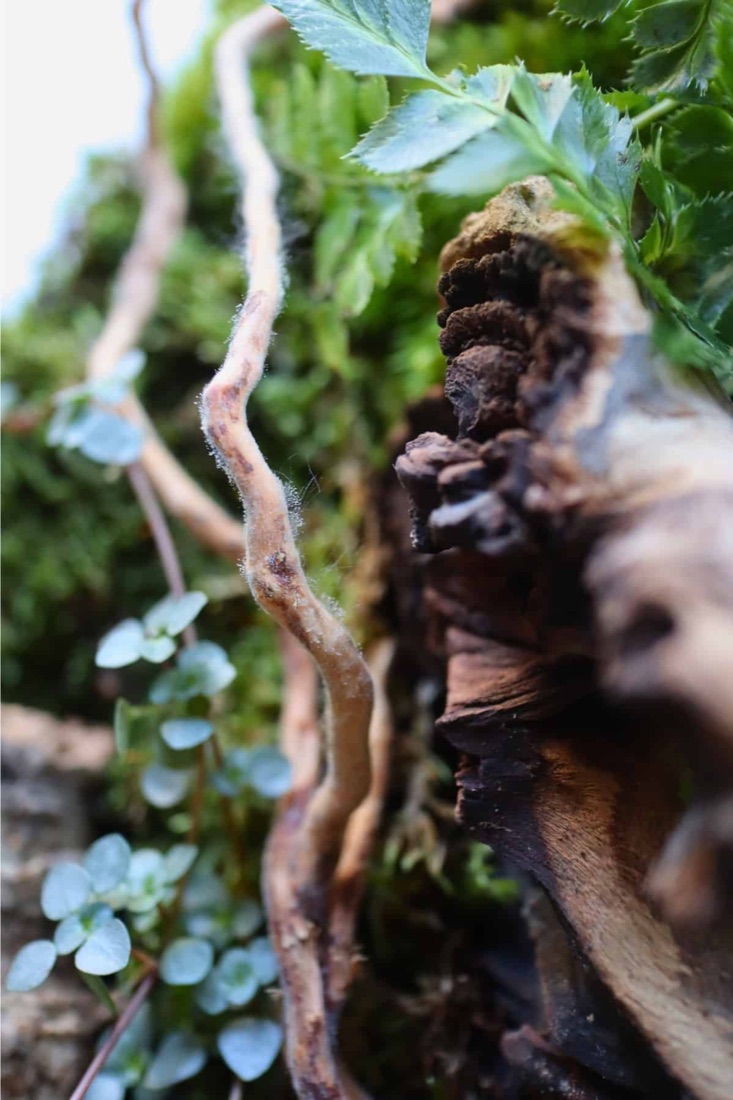
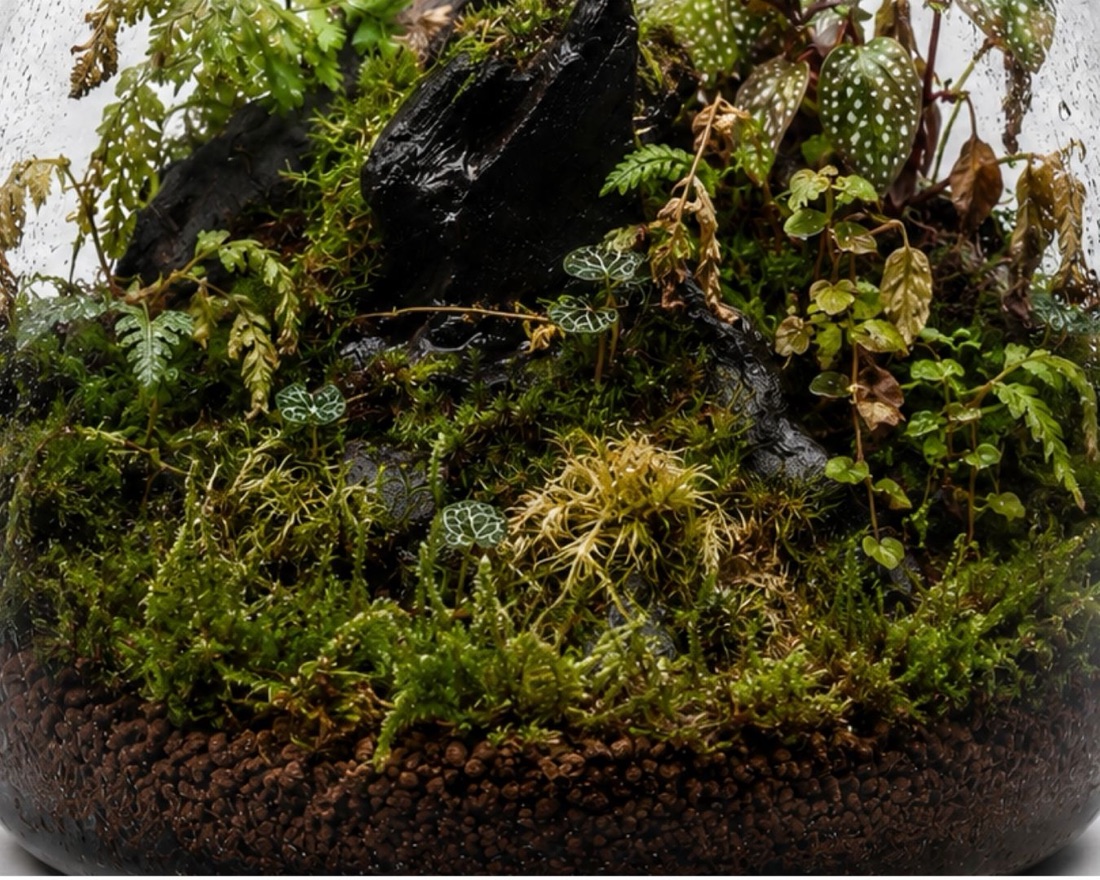
Add a clean-up crew (optional).
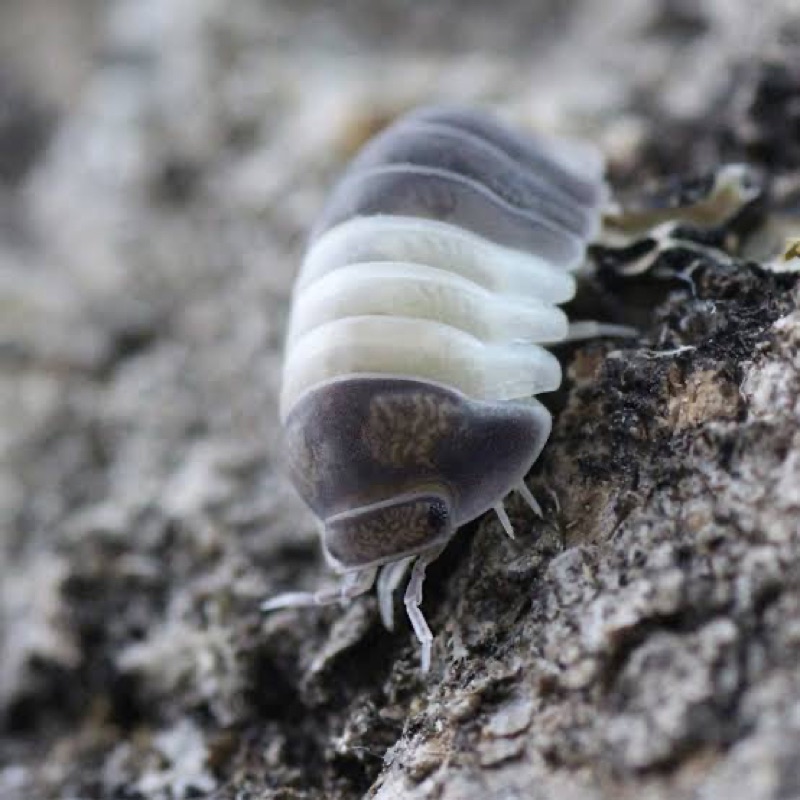
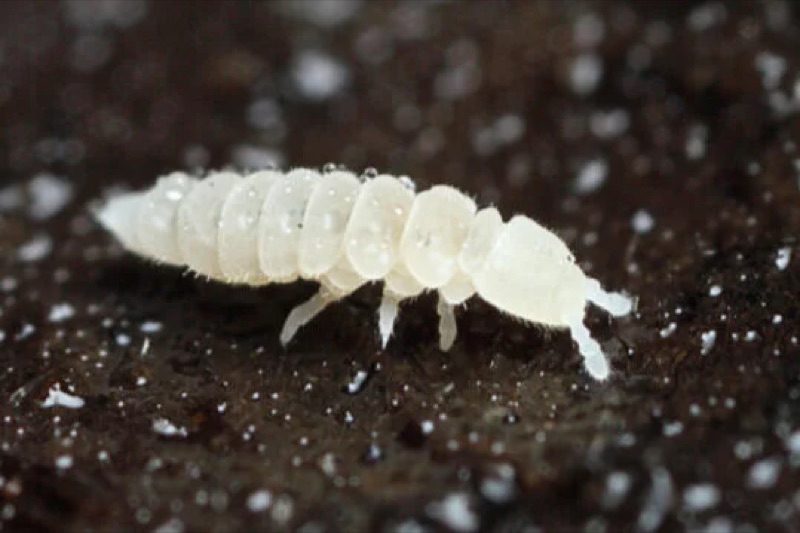
Tiny springtails and isopods are nature's janitors: they quietly eat mould, fallen leaves and debris, keeping the whole system balanced with zero effort from you. Give the terrarium 2-3 weeks to settle before you add isopods: the soil needs to establish some biofilm and decaying matter for them to feed on, so they have a food source waiting. Most established terrariums then run beautifully with a little crew inside. We can set you up. Just ask.
Good to know
Will it attract mosquitoes or insects?+
No. A closed terrarium has no open, standing water for mosquitoes to breed in, and the sealed lid keeps insects out. It's one of the cleanest ways to keep greenery indoors.
What can live inside a terrarium?+
It's designed as a living plant display. The only "livestock" is an optional micro clean-up crew (springtails and isopods) that eats mould and debris. A nature terrarium isn't a home for fish, reptiles or amphibians; those need a vivarium or paludarium.
How long will it last?+
Years, with the basics above. A well-kept terrarium is a long-lived, largely self-sustaining system. The plants grow and the scene shifts over time, which is part of the charm.
How much maintenance does it need, and how do I clean it?+
Very little. Mist only when needed, trim overgrowth, wipe any algae off the glass, and pick out dead leaves. There's no "deep clean". A clean-up crew handles the rest.
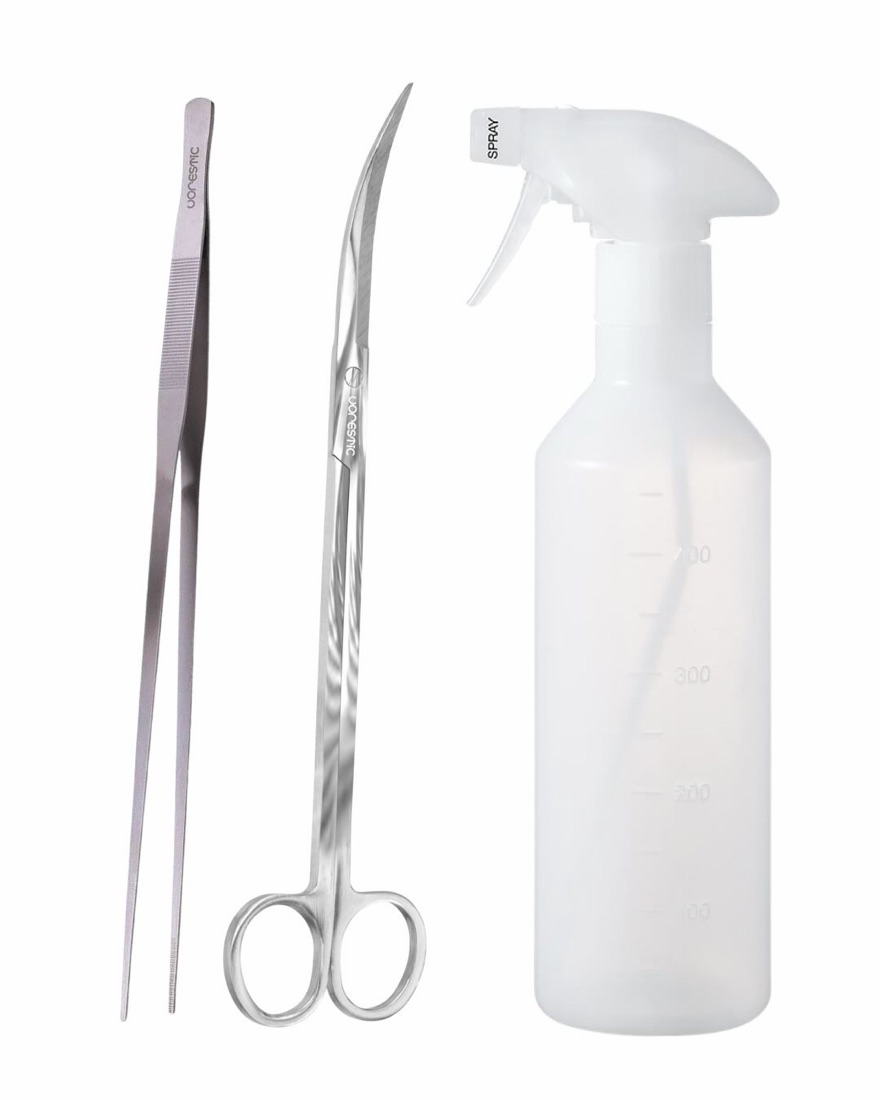
What tools do I need?+
A misting/spray bottle, a pair of long tweezers for placing or removing things, and small scissors for trimming. That covers it.
Can I add new plants later?+
Yes. Pick humidity-loving plants (ferns, mosses, fittonia and the like), rinse off any soil and pests first, tuck them into the substrate and mist them in. Avoid succulents and cacti: they don't like the humidity.